

Module
Methods in systematic reviews and meta-analysis of interventions
Teaching conducted in English
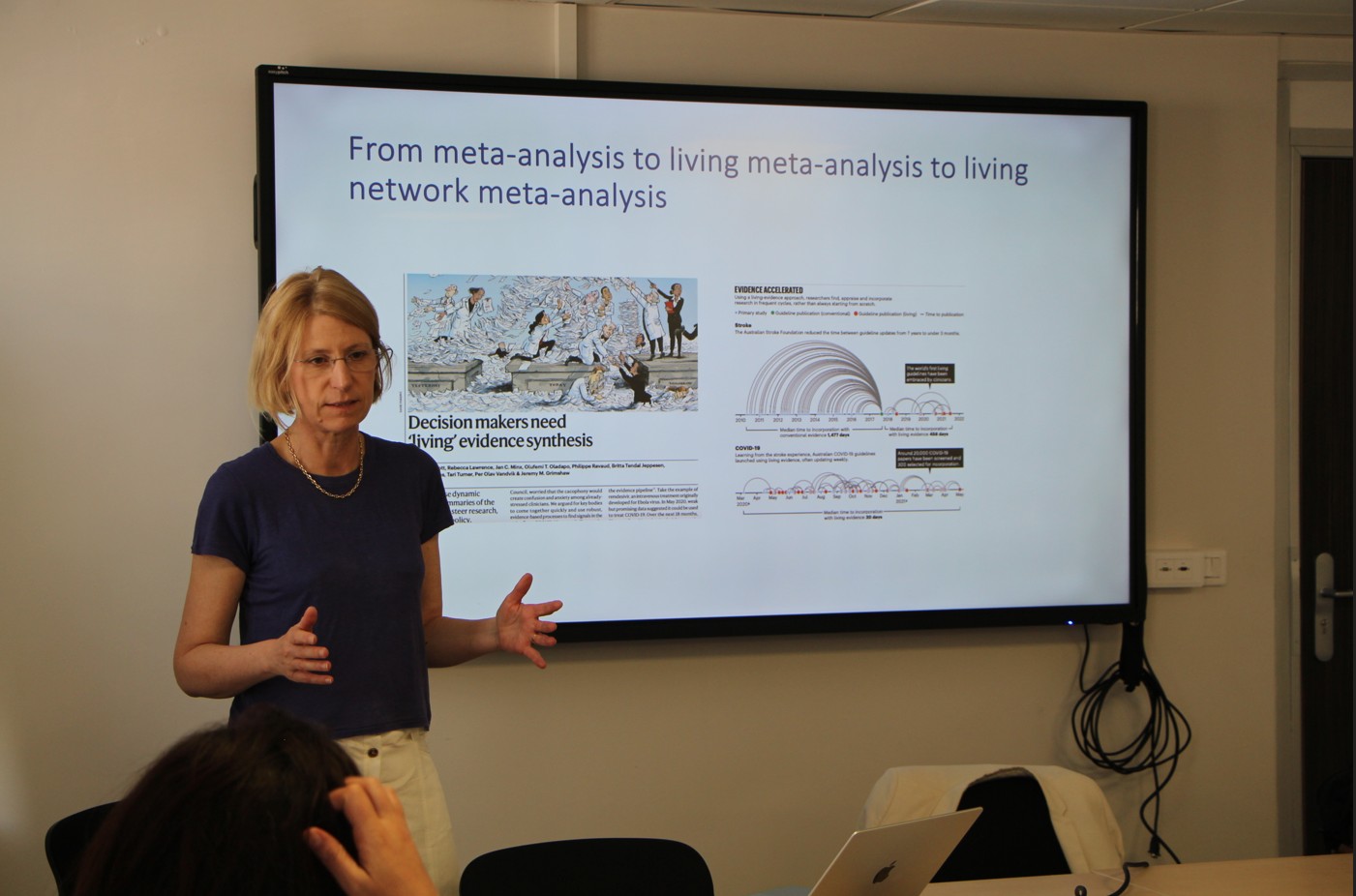
This three-day workshop, organized in collaboration with Cochrane France, offers a comprehensive foundation in conducting systematic reviews of healthcare interventions.
The program focuses primarily on randomized controlled trials (RCTs) while also providing essential guidance on when and how to incorporate non-randomized studies to address broader review questions.
Through a combination of lectures and practical exercises, participants will gain hands-on experience in all stages of the review process, including formulating a PICO question, developing a protocol following PRISMA-P guidelines, assessing risk of bias (using ROB 2 for RCTs and an introduction to ROBINS-I for non-randomized studies), performing meta-analysis, and interpreting findings using the GRADE framework. The course will also highlight the evolving role of AI tools in streamlining these processes.
The training includes applied session using key software such as Covidence, RevMan and GRADEpro. Although delivered in English, it is designed to be accessible to participants whose first language is not English.
All participants receive a one-year subscription to Cochrane interactive learning a comprehensive 22-hour online course covering the principles of systematic review along with add additional modules on health economics, network meta-analysis, health equity,health equity, qualitative evidence synthesis, rapid reviews, and living systematic reviews.
Prerequisites: A basic understanding of research methods and statistics is recommended, but not required.
Software to be installed beforehand: Covidence, Revman and GRADEpro
covidence: https://www.covidence.org/
RevMan: https://revman.cochrane.org/info/trial
GRADEpro: https://www.gradepro.org/
General information
About this course
Dates
From June 1st to June 3, 2026 (full days)
Prices
Programme
Day 1
- Welcome & Introduction to Systematic Reviews
Isabelle BOUTRON - Protocol Development & PRISMA-P Framework
Formulating the Research Question (PICO Approach)
Carolina GRANA - Search Strategy: Principles and Tools
Introduction to Screening Practical with Covidence
Carolina GRANA - Data Extraction – Concepts & Tools
Lina GHOSN - Pratical session
Lina GHOSN - The Role of AI in Evidence Synthesis: Risks and Opportunities
Isabelle BOUTRON
Day 2
- Risk of Bias Assessment using Practical ROB2
Lina El CHALL, Sally YAACOUB - Meta-Analysis: Hands-on Workshop using RevMan
Elodie PERRODEAU
Day 3
- Pratical session
Sally YAACOUB & Lina GHOSN - Interpreting results
Sally YAACOUB - Certainty of Evidence with GRADE
Practical with GRADEpro
Lina GHOSN & Sally YAACOUB - Final Discussion & Feedback
Sally YAACOUB & Lina GHOSN
Speakers

Isabelle Boutron
Isabelle Boutron, MD, PhD, is a professor of epidemiology at Université Paris Cité and director of the Centre for Research in Epidemiology and Statistics (CRESS). She is also director of Cochrane France, part of the international Cochrane network dedicated to improving health decision–making through the synthesis of evidence. Professor Boutron is internationally recognised for her work on improving methods for evaluating pharmacological and non-pharmacological interventions. Her methodological expertise covers randomised trials, bias assessment, blinding, placebo effects, external validity, complex interventions and innovative approaches to evidence synthesis, including living systematic reviews. She contributes significantly to international reporting standards as a member of the SPIRIT-CONSORT steering group and recently co-led the CONSORT 2025 update. She is also co-chair of the Cochrane Bias Methods Group. Isabelle led the COVID-NMA initiative, an open-access platform that provides a rolling synthesis of data from clinical trials on COVID-19 treatments and vaccines.
A pioneer in the field of research on research, Professor Boutron’s work explores ways to improve research practices through greater transparency, better reproducibility and reduced bias, particularly through the study of “spin”, or how biased presentation and interpretation of results can mislead readers. She has coordinated and led numerous international projects, including a Marie Skłodowska-Curie-funded doctoral programme on research methods, and is the author of over 200 articles published in renowned peer-reviewed journals.
Lina Ghosn
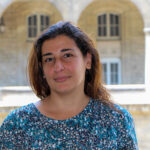
Lina Ghosn is an epidemiologist at Cochrane France and part of the CRESS Methods team. She is a pharmacist and holds a Master’s degree in Public Health, specialising in comparative effectiveness research, from the University of Paris. She also teaches at the University of Paris, where she coordinates the university diploma in systematic reviews and meta-analyses in health. Lina’s work focuses on improving clinical research methods, with an emphasis on evidence synthesis, transparency in research, and communication of randomised controlled trial results. Her methodological expertise includes systematic reviews, network meta-analyses, and meta-studies evaluating challenges related to compliance with reporting guidelines such as CONSORT and its extensions. She is the author and co-author of several Cochrane reviews and cross-sectional studies, focused on improving the credibility and usability of clinical evidence. At Cochrane France, she coordinates national projects aimed at promoting the use of high-quality evidence in health decision-making. She also plays an active role in training and mentoring students and health professionals in systematic review methodology.

Carolina Grana
Carolina Grana holds a Doctor of Veterinary Medicine degree, a Master’s degree in Public Health (specialising in epidemiology) and a Master’s degree in Comparative Effectiveness Research. She has developed strong expertise in evidence synthesis, including data extraction, risk of bias assessment and systematic review preparation. During the COVID-19 pandemic, she wrote her first scientific article and co-authored two Cochrane reviews on vaccine effectiveness. Her research focuses primarily on transparency in scientific publishing and the dissemination of research results. She is actively involved in meta-research and methodology projects, contributing as an author and co-author to several publications in this field. In addition to her research work, Carolina teaches as part of the university diploma (DU) on systematic reviews and meta-analyses at Université Paris Cité and supervises students working on evidence synthesis and related topics.

Elodie Perrodeau
Elodie Perrodeau is a biostatistician in the Methods team at CRESS and Cochrane France. She plays a crucial role in conducting statistical analyses for various clinical studies, including randomised clinical trials and observational studies. She has recently taken an interest in exploring innovative approaches in observational studies, such as emulated trials. In addition to her work in the field of statistical analysis, she also teaches in the Master’s programme in Public Health in the Comparative Effectiveness Research programme and the University Diploma in Advanced Methods of Systematic Reviews and Meta-analyses at Université Paris Cité.
Sally Yacoub
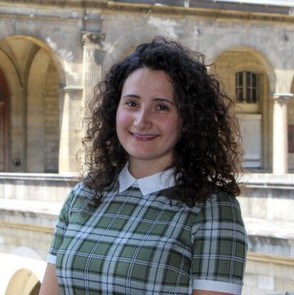
Sally Yaacoub is a postdoctoral researcher in meta-research at Université Paris Cité, within the Centre for Research in Epidemiology and Statistics (CRESS, UMR 1153 – METHODS team). She is a registered pharmacist and holds both a Master’s degree and a PhD in Public Health, with a specialization in epidemiology.
Her work focuses on meta-research to improve how evidence is generated, synthesized, and translated into decision-making. She has extensive experience in systematic reviews, meta-analyses, rapid and living evidence syntheses, and guideline development methodology. Her current research explores the role of target trial emulations in supporting decision-making. She has led numerous systematic reviews and provided methodological support to inform decisions for local and international organizations, including the World Health Organization. Sally teaches systematic reviews and meta-analysis at Université Paris Cité and is actively involved in training and mentoring students in evidence synthesis. She is a member of international methodological networks, including GRADE, the Guidelines International Network (GIN), and the Society for Research Synthesis Methodology.