

Module
Recherches épidémiologiques sur les cancers pédiatriques et autres pathologies rares
Teaching conducted in French
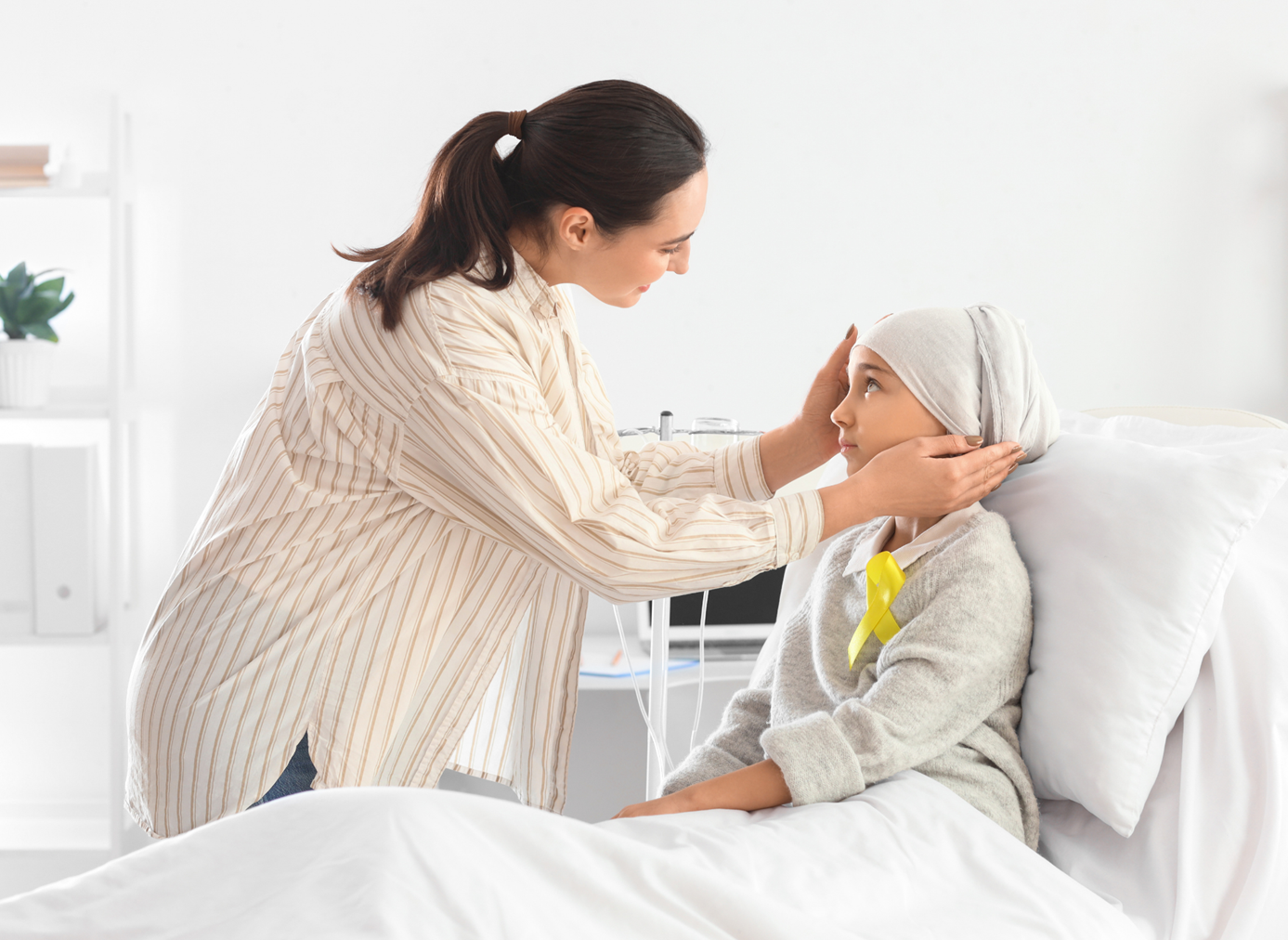
This course aims to present the main tools and methods of epidemiology applied to rare diseases, particularly paediatric cancers and congenital malformations. It will begin with a presentation on registries, their recording methods, and their central role in health surveillance and research. Particular attention will be paid to cluster investigations and methods developed for the long-term follow-up of paediatric cancer survivors. The second part of the course will focus on the tools and methods used to study the causes of paediatric cancers, with particular emphasis on genetic and environmental determinants.
At the end of this module, participants will be able to: i) understand the key concepts of the epidemiology of rare diseases and the methodological challenges associated with their rarity, ii) understand how registries work and their major role in health surveillance and research, iii) identify the epidemiological tools and methods best suited to studying the causes of rare diseases and long-term health determinants, iv) critically interpret the results of epidemiological studies in this field of research.
Prerequisites: basic knowledge of epidemiology
General information
About the course
Dates
Prices
Programme
Day 1
Session 1 –Registries – tools for measuring and monitoring rare diseases, unique resources for research (Claire Poulalhon, Emmanuel Desandes, Isabelle Monier)
Morning
- Functioning and role of a departmental registry – Paris Registry of Congenital Malformations (REMAPAR) (Isabelle Monier)
- National surveillance of paediatric cancers – National Childhood Cancer Registry (RNCE) (Claire Poulalhon, Emmanuel Desandes)
- Cluster investigations (Stéphanie Goujon)
Afternoon
Session 2 – Tools and methods for long-term patient follow-up (Claire Poulalhon, Claire Berger)
- The value of a cohort for long-term follow-up of children with cancer – challenges and research questions: the example of COHOPER (Claire Poulahon)
- Prevention: a MOOC for personalised follow-up (Claire Berger)
Day 2
Session 3 – Causes of pediatric cancers – Tools and methods for etiological research (Audrey Bonaventure, Stéphanie Goujon)
Morning
- Interest in case-control studies for rare pathologies (Audrey Bonaventure)
- Data and methods for the study of genetic factors (Danielle Awounou, Audrey Bonaventure)
Afternoon
- Use of geocoded data for the study of environmental exposures – GEOCAP Program (Stéphanie Goujon)
- Assessment of residential exposure to pesticides: methodological challenges (Aurélie Danjou)
- Air pollution exposure assessment: concepts and methodological approaches (Charlotte Salmon)
- Statistical methods to account for multiple exposures (Danielle Awounou)
Speakers
Danielle Awounou
Danielle Awounou is a postdoctoral researcher in the OPPaLe team (Obstetric, Perinatal, Pediatric Lifecourse Epidemiology). Her work focuses on research into risk factors associated with the development of pediatric cancers. She is particularly interested in the role of genetic factors and the influence of environmental exposures. The objective is to contribute to a better characterization of the etiological mechanisms of these rare pathologies, by mobilizing genomic data, multi-source geolocalized data and advanced statistical approaches.

Claire Berger
After 32 years spent in pediatric oncology as a hospital practitioner at the Saint-Étienne University Hospital, Claire Berger is transferring towards public health within the “Prevention and population health” division. For 25 years, her research has focused on the long-term outcome of children cured of childhood cancer. The MOOC “Cancer in childhood, living well afterwards”, which she presents, is a personalized communication tool for former patients included in the national childhood cancer registry. It was designed to inform and train the people concerned in order to promote their well-being and lasting health. As part of the e-Quol project, it is being translated into 20 European languages.
Audrey Bonaventure
Audrey Bonaventure is a doctor and has worked since 2010 in the field of childhood cancer epidemiology. Much of her research aims to improve our understanding of the causes of pediatric cancers, and she is particularly interested in the role of genetic, perinatal and medical factors. Interested in questions related to the survival and future of patients, Audrey Bonaventure is also involved in the pediatric cancer observation platform, as a member of the executive committee, with Claire Poulalhon and François Doz.
Principal investigator of the national case-control studies ESCALE and ESTELLE, initially led by Dr Jacqueline Clavel (Aetiological studies), she is also responsible for the “epidemiology of childhood and adolescent cancers” axis of the OPPaLE team, with Stéphanie Goujon. Her research is enhanced by strong national and international collaborations, and she is a visiting researcher in the Department of Health Sciences at the University of York (Epidemiology and Cancer Statistics – Health Sciences, University of York) and a member of the Management Group of the Childhood Leukaemia and cancer International Consortium (https://www.clic.ngo/). Audrey Bonaventure has solid experience teaching epidemiology in an international environment.
Aurélie Danjou
Aurélie Danjou is a cancer epidemiologist, specializing in the research of environmental risk factors. After her postdoctoral fellowship at the International Agency for Research on Cancer, where she notably worked on the etiology of testicular cancers in young men, she joined the CRESS team in 2022. Since then, she has developed research relating to the assessment of environmental exposures, based on geographic information systems, to pesticides and emerging pollutants such as per- and polyfluoroalkyl substances (PFAS), and their impacts on the occurrence of pediatric cancers, within the program. GEOCAP.

Emmanuel Desandes
Emmanuel Desandes is a medical specialist in comprehensive cancer centers, working in epidemiology, public health, and social medicine at the Lorraine Cancer Institute (ICL, Vandoeuvre-lès-Nancy), and a physician–researcher with INSERM at CRESS UMR-1153, Université Paris Cité (OPPaLE team: Obstetric, Perinatal, and Paediatric Life course Epidemiology). He is also the Director of the French National Registry of Childhood Solid Tumors. His research focuses on two main areas: the epidemiology of childhood cancers and the epidemiology of adolescents and young adults with cancer.
Stéphanie Goujon
With a background in biostatistics, Stéphanie Goujon joined Inserm in 2001. Holder of a PhD and a French Habilitation to Supervise Research (HDR), she conducts research on environmental risk factors for childhood cancers within the OPPaLE team (Obstetric, Perinatal, Paediatric Life course Epidemiology) at the Research Center in Epidemiology and Statistics (CRESS, UMR 1153). She also contributes to the team’s leadership as Deputy Co-Director.
Her research is based on the GEOCAP programme (‘Geolocalisation des cancers pédiatriques’), of which she is the Principal Investigator. Linked to the French National Registry of Childhood Cancers (RNCE), GEOCAP main objective is to study the influence of environmental exposures on the risk of childhood cancers in France, using geocoded data and a Geographic Information System. GEOCAP research focus particularly on exposures to pesticides near agricultural areas, air pollution, PFAS, ionising radiation (European RadoNorm project) and non-ionising radiation, and magnetic fields near high-voltage power lines.
Since her PhD, Stéphanie Goujon has also developed expertise in the field of surveillance of childhood cancers in France (spatial and temporal variations in incidence, cluster investigations, surveillance of at-risk populations).

Claire Poulalhon
A specialist in Public Health, Claire Poulalhon has been working since 2016 within the French National Registry of Childhood Hematological Malignancies (RNHE), and more broadly within the French National Childhood Cancer Registry (RNCE). Affiliated with the Inserm OPPaLE team, she focuses her work on the surveillance of childhood and adolescent cancers and on epidemiological research in pediatric oncology.
As part of her PhD in epidemiology, she notably developed a systematic follow-up of registry patients, combining clinical data, survey data, and data from the French National Health Data System (SNDS). This project, COHOPER, is part of the Childhood Cancer Observation Platform (HOPE-EPI/CCOP), funded by the “Investments for the Future” Programme and subsequently by the Cohorts 2030 Plan. Its aim is to assess the long-term health status and quality of life of children with cancer—major public health issues—and ultimately to contribute to improving their care.
Since January 2025, Claire Poulalhon has been Director of the RNHE and Scientific Co-Lead of HOPE-EPI/CCOP, together with Dr Audrey Bonaventure and Dr François Doz. In this role, she oversees the opening of cohort data to the scientific community, develops multidisciplinary collaborations strengthening cooperation among the various stakeholders involved—both epidemiologists and clinicians—and actively contributes to national and European research projects on survival, late effects, and post-treatment follow-up.
Charlotte Salmon
Holder of a PhD in Epidemiology and Health Sociology from the Institut national de la recherche scientifique (INRS) in Montreal, Canada, Charlotte Salmon joined the OPPaLE team in 2023 as a postdoctoral researcher. Her work, conducted within the GEOCAP program and based on the French National Registry of Childhood Cancers, focuses on identifying environmental factors associated with pediatric cancers. She is particularly interested in the impact of air pollution, whether from traffic or industrial sources, on the risk of cancer in children.
Isabelle Monier
Isabelle Monier is a midwife and epidemiologist. Her research initially focused on prenatal screening for intrauterine growth restriction. Since January 1, 2025, she has been Head of the Paris Congenital Anomalies Registry and has expanded her research activities to include the surveillance and prenatal screening of congenital anomalies.