

Module
Comparing multiple interventions using network meta-analysis
Teaching conducted in English
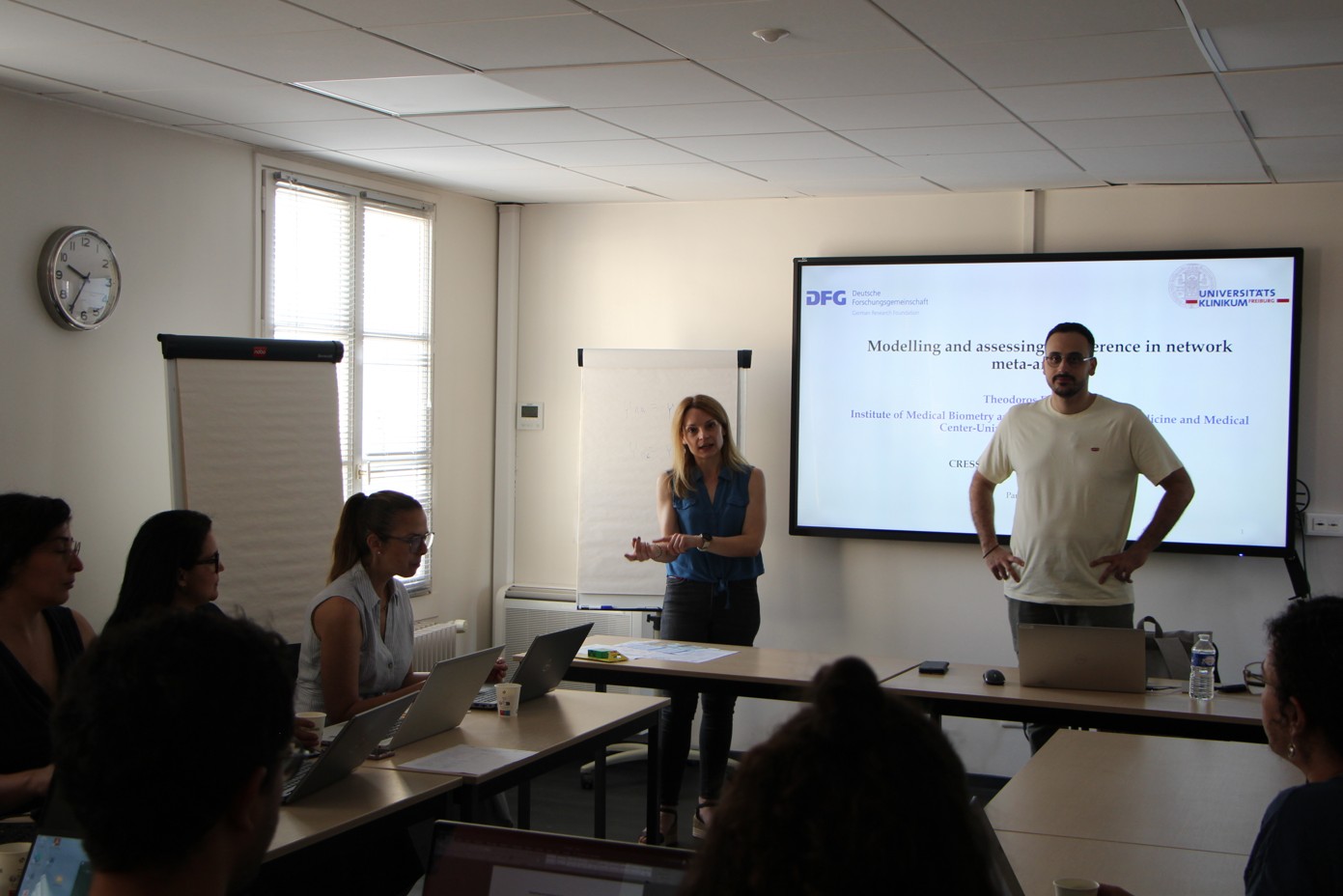
Context: For a given condition, several alternative treatment options may exist. Network meta-analysis is an extension of pairwise meta-analysis that allows data from intervention networks to be synthesised simultaneously. By combining direct and indirect information, it sheds light on all possible treatment comparisons, including those for which no direct comparison has been made.
Objective: This module focuses on the role of network meta-analyses in research on the comparative effectiveness of health interventions. The objective is to examine the entire process of a network meta-analysis, from planning and developing a protocol to the final report and manuscript publication.
By the end of this course, participants will be able to:
- Understand the concept and fundamental principles of network meta-analyses
- Write a network meta-analysis protocol
- Understand and evaluate the assumptions underlying a network meta-analysis
- Synthesise data from a network of interventions
- Interpret the results of a network meta-analysis
- Identify limitations and potential sources of bias within a network of interventions
- Critically evaluate the results of a network meta-analysis
Prerequisites:
Participants must have a good understanding of systematic reviews and meta-analyses, as well as basic knowledge of in statistics and some experience with R.
If you do not meet all those prerequisites but are planning to attend the course “Methods in systematic reviews and meta-analysis of interventions”, then you can attend this course too.
General information
About the course
Dates
Prices
Programme
Day 1
- Welcome and introductions
- Lecture 1. Reminder on pairwise meta-analysis and scope of network meta-analysis (NMA)
- Lecture 2. Indirect and mixed comparisons
- Lecture 3. Assumptions and validity of NMA
Lunch break
- Lecture 4. Different approaches for performing NMA
Coffee break
- Lecture 5. Data formats and exemplar dataset
- Practical 1: Performing pairwise meta-analysis with the R package meta
- Practical 2. Performing NMA using the R package netmeta
- Lecture 6. Different approaches for modelling and assessing incoherence in NMA
Day 2
- Review of first day and questions
- Practical 3. Assessing incoherence using R package netmeta
- Lecture 7. Different approaches for ranking interventions and interpreting results
- Practical 4. Performing multiple treatment ranking using R package netmeta
- Lecture 8. Evaluating the confidence of the evidence from NMA
Lunch break
- Practical 5. Evaluating the confidence of the evidence from NMA using CINeMA
Coffee Break
- Lecture 9. Performing NMA with multiple components
- Practical 6. Performing NMA using the user friendly software NMAstudio
- Group discussion on published NMAs and closure
Speakers

Anna Chaimani
Anna Chaimani is an Associate Professor at the Department of Biostatistics of the University of Oslo in Norway. Until recently, she was a Senior Researcher at Inserm and the Leader of the Evidence Synthesis Research Group of CRESS with ongoing collaboration. She has extensive experience in the field of evidence synthesis with a greater focus on the development of novel statistical methodologies and innovative software solutions for analysing large networks of healthcare interventions. She has served for several years as co-Convenor in two Methods Groups of Cochrane, the Statistics Group and the Multiple Interventions Group. Currently, she’s working on the development of new methods for synthesizing complex interventions, integrating observational data into networks of interventions, and tools for communicating the results of network meta-analyses to various stakeholders.

Theodoros Evrenoglou
Theodoros Evrenoglou is a Postdoctoral Researcher and Group Leader of the Meta-Analysis Group at the Institute of Medical Biometry and Statistics, University of Freiburg, Germany. He holds a PhD in Biostatistics from Université Paris Cité, specializing in network meta-analysis.His PhD was conducted within the METHODS group of CRESS, where he spents over four years. His current scientific interests focuses on the development of novel statistical methods and software for meta-analysis and network meta-analysis. In addition to his main academic activities, he’s actively involved with Cochrane, where he currently serves as co-chair of the Statistical Methods Group. At present, he’s working on developing new statistical methods for treatment ranking in network meta-analysis, as well as innovative approaches for synthesizing evidence and producing treatment rankings across multiple outcomes.